Rawap
Uyghur · Plucked Instrument
Introduction
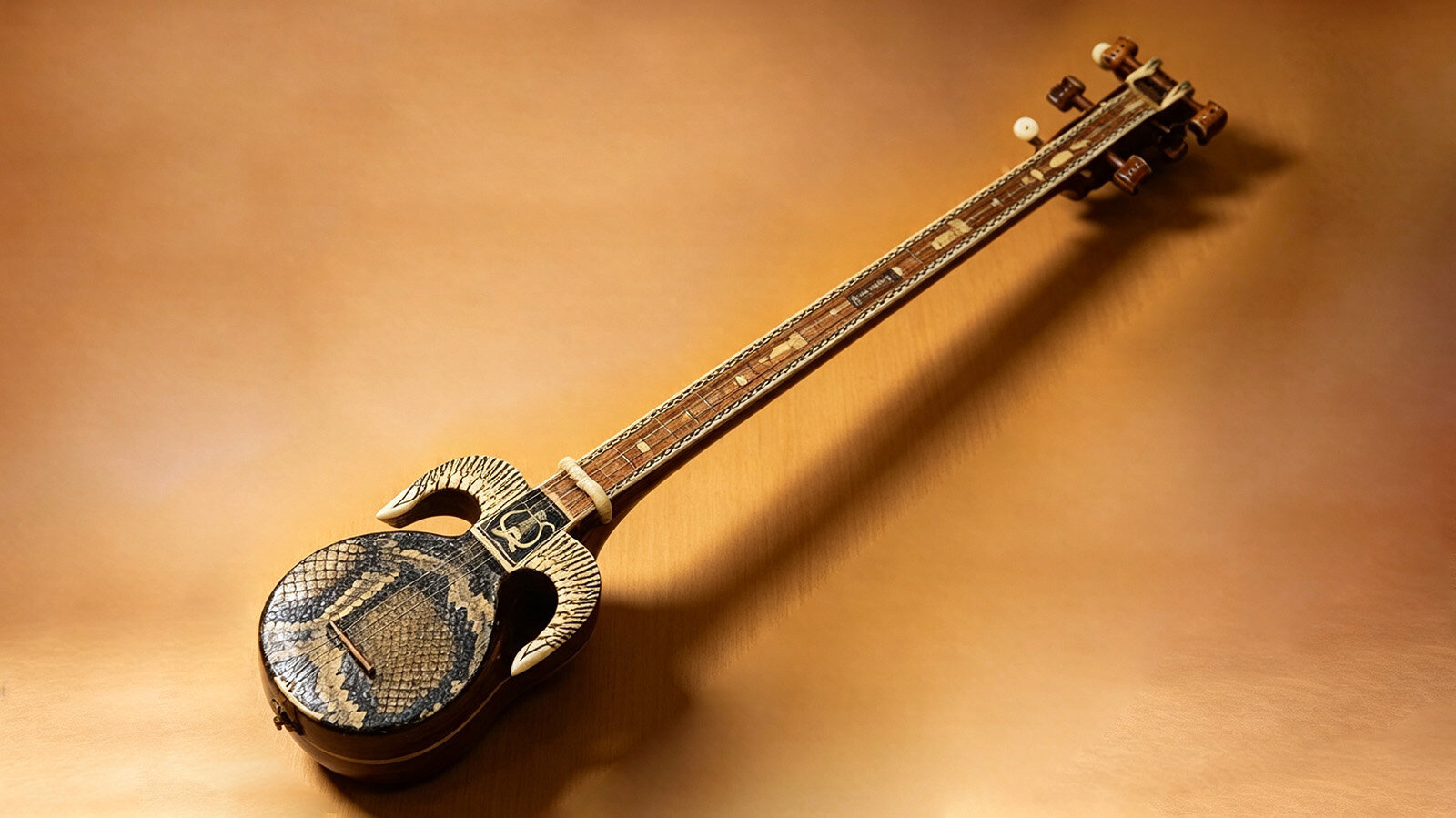
The Rawap is a traditional plucked string instrument of the Uyghur people, featuring a distinctive long neck and resonator covered with animal skin. It has a wide range and bright, penetrating tone, making it an important accompanying instrument for the Twelve Muqam and a popular solo instrument.
History & Origin
The Rawap originated in ancient Persia and was introduced to Xinjiang via the Silk Road over 1,000 years ago. It evolved from the Persian 'Rubab' and was adapted to Uyghur musical preferences. By the Ming and Qing dynasties, the Rawap had become a central instrument in Uyghur music, especially in the performance of Muqam suites.
Instrument Features
The Rawap typically has 5 main strings and 8-10 sympathetic strings that resonate when played. The body is carved from a single piece of mulberry wood, with the resonator covered with snake skin or fish skin. The long neck allows for expressive slides and ornaments. Its tone is bright, metallic, and carries well in ensemble settings.
Performance Videos

