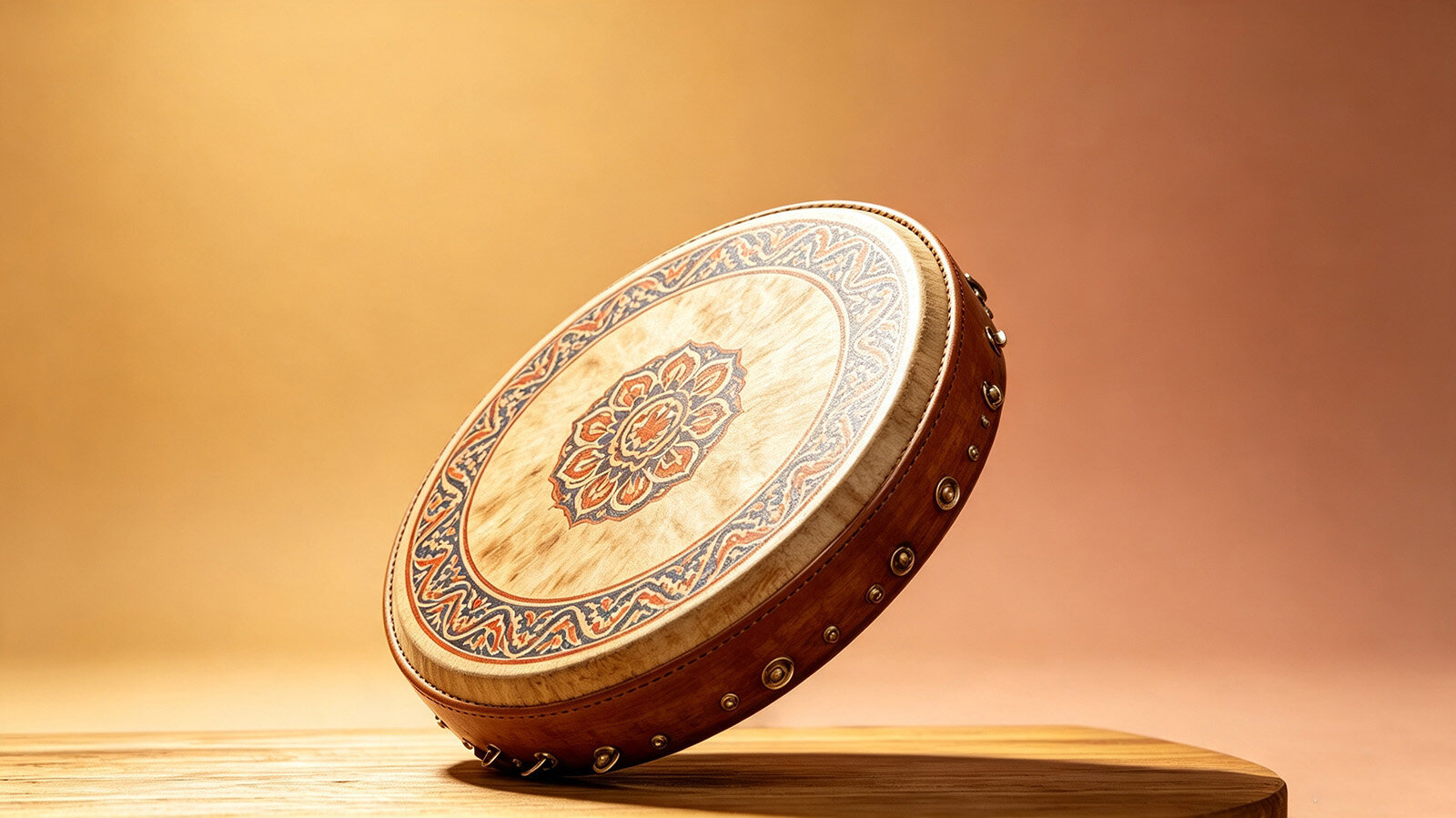
Dap
Uyghur · Percussion Instrument
Introduction
The Dap (also known as 'Nagara') is one of the most important percussion instruments in Uyghur music. It is a frame drum with iron rings embedded inside the drum frame, producing a crisp and bright sound when struck. The Dap is an essential accompanying instrument for the Twelve Muqam, the grand classical music suite of the Uyghur people.
History & Origin
The Dap has a history of over 1,500 years in Xinjiang. Ancient murals from the Kizil Thousand Buddha Caves depict musicians playing frame drums similar to the Dap. During the Tang Dynasty, the Dap was widely used in court music and became an important instrument along the Silk Road. Over centuries, it has been refined and is now an indispensable part of Uyghur musical tradition.
Instrument Features
The Dap typically has a diameter of 25-40 cm and is made from animal skin stretched over a wooden frame. Small iron or brass rings are attached inside the frame, creating a jingling sound when the drum is shaken or struck. The player holds the drum vertically and uses fingers and palm to produce various rhythms. It is known for its bright, penetrating tone that can cut through ensemble music.
Performance Videos

